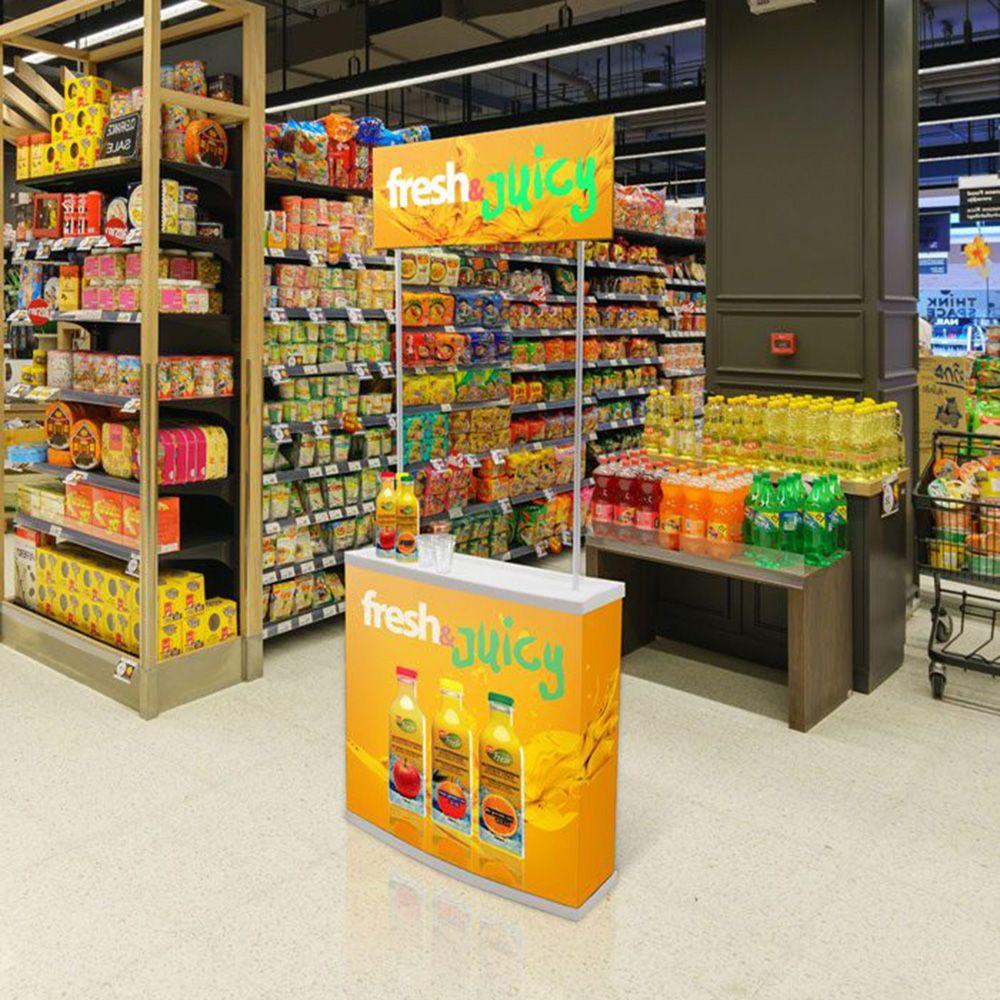
POP Displays vs Permanent Displays: Which Works Best for Retail
Not every product needs to make a long-term commitment to the shelf.
Sometimes, a brand needs a quick burst of attention—a seasonal promotion, new product launch, limited-time offer, or campaign that needs to grab shoppers before the moment passes. That’s where POP displays can shine. Permanent displays, on the other hand, are built for the long haul, creating a consistent presence that can strengthen brand recognition and make products easier to find over time.
But choosing between the two isn't always as simple as temporary versus permanent.
Retailers and brands have to weigh cost, durability, flexibility, shopper engagement, store space, and long-term goals. After all, the best display isn't necessarily the biggest or most eye-catching one. It's the one that fits the job.
So, when should you choose a POP display, and when does a permanent display make more sense? Let's break down the differences and find out which option can deliver the right impact for your retail strategy.
Quick-Impact Displays Capture Shopper Attention
Temporary Displays Support Short-Term Campaigns

POP displays are often designed to do one thing exceptionally well: get noticed.
Placed near checkout areas, aisle entrances, promotional zones, or other high-traffic locations, these displays can give products an extra opportunity to catch a shopper's eye. They don't necessarily need to stay around forever. In fact, their temporary nature is often part of their appeal.
Think about a summer promotion for a beverage brand. The campaign may only run for a few months. A large, permanent fixture could be excessive, especially when the merchandising strategy will change once the season ends.
A temporary POP display can create the necessary impact without locking the retailer into a long-term arrangement.
That's a big advantage.
Temporary displays are also useful when a brand wants to test an idea. Instead of committing significant resources to a permanent fixture, the brand can introduce a display, watch how shoppers respond, and learn from the results.
If it works, fantastic. If it doesn't, there's less baggage to deal with.
Flexible Designs Adapt To Retail Changes
Retail doesn't stand still.
Products change. Promotions change. Store layouts change. Consumer preferences shift. Even successful campaigns eventually need a refresh.
POP displays can keep up with that pace.
Because they're generally designed for shorter campaigns, brands can experiment with different messages, graphics, shapes, and merchandising approaches. One display might focus on a new product launch, while another highlights a limited-time promotion.
This flexibility can be particularly useful for brands with frequent product introductions.
Instead of forcing every campaign into the same physical structure, brands can create displays around the specific objective. One campaign might need maximum visibility, while another might need to educate shoppers about a new product benefit.
The display can change with the message.
Long-Term Displays Build Stronger Brand Presence

Permanent Displays Establish Lasting Brand Presence
Permanent displays play a different game.
Rather than creating a short-lived promotional moment, they become part of the retail environment. They can establish a recognizable destination for a brand and give shoppers a consistent place to find its products.
That's especially valuable for brands with established product ranges.
Imagine walking into a store and knowing exactly where to find a particular brand because its dedicated fixture has become familiar. Over time, that consistency can make the shopping experience easier.
Permanent displays aren't simply structures holding products. When they're thoughtfully designed, they become part of the brand experience.
They can communicate brand identity through materials, colors, shapes, signage, product organization, and overall presentation.
And there's something to be said for familiarity. Shoppers don't always want to hunt around the store for products they already know and like.
Durable Structures Support Ongoing Merchandising
The word "permanent" doesn't necessarily mean something will literally remain forever. Retail environments evolve, and even permanent fixtures may eventually be updated or replaced.
Instead, the term generally refers to a display designed for long-term use.
That means durability becomes a much bigger consideration.
Materials need to withstand repeated shopper interaction, cleaning, restocking, movement, and everyday retail wear and tear. A display that looks fantastic on day one but starts showing damage after a few weeks isn't doing anybody favors.
Permanent fixtures need to be built with the long game in mind.
That could mean stronger construction, durable finishes, practical product access, and components that are easy for store employees to maintain.
It may cost more upfront, but the investment can make sense when the fixture is expected to deliver value for years rather than weeks.
POP Displays Create Flexible Retail Opportunities

POP Displays Encourage Immediate Shopper Engagement
One of the biggest strengths of POP displays is their ability to create an interruption in the normal shopping journey.
Shoppers often enter stores with a plan. They know what they need, where they're going, and sometimes how quickly they want to get in and out.
A well-positioned POP display can disrupt that routine—in a good way.
A bold headline, product demonstration, unusual shape, or clever merchandising arrangement can make someone pause.
And that pause matters.
A shopper who stops is more likely to notice the product, consider the message, and potentially make an unplanned purchase.
This is particularly useful for impulse products, new launches, promotional items, and products that benefit from additional explanation.
But there's a fine line.
A display shouldn't become so complicated that shoppers don't know where to look. The goal isn't to create visual chaos. It's to create a clear reason to stop.
Seasonal Promotions Benefit From Flexible Placement
Seasonal retail campaigns are practically tailor-made for temporary displays.
Halloween, Christmas, summer promotions, back-to-school campaigns, sporting events, and special occasions all create merchandising opportunities that may only last for a limited time.
A permanent fixture isn't always the answer.
POP displays can be designed specifically around the season, giving retailers a way to refresh the environment without making a long-term commitment.
For brands, this also opens the door to more creative campaigns.
A summer display can feel bright and energetic. A holiday display can create a sense of gifting or celebration. A new-product launch can focus heavily on education and discovery.
The display becomes part of the campaign rather than simply a place to put products.
Permanent Displays Deliver Consistent Brand Visibility

Permanent Fixtures Maximize Long-Term Retail Value
If POP displays are sprinters, permanent fixtures are marathon runners.
They’re designed to keep working long after the initial excitement of a campaign has passed.
For brands with strong retail distribution and predictable product demand, that can be extremely valuable.
A permanent display can create a dedicated footprint within a store, making the brand easier to recognize and easier to locate. Instead of relying on temporary promotional moments, the brand has an ongoing physical presence.
Over time, that presence can support stronger brand recall.
It also gives the retailer a more structured merchandising solution. Products can have a defined home, and shoppers may become accustomed to seeing them in the same location.
That consistency shouldn't be underestimated.
Consistent Placement Strengthens Shopper Recognition
People are creatures of habit.
Once shoppers learn where something is, they tend to appreciate being able to find it there again.
A permanent display can support that behavior.
Consistent placement means shoppers don't have to search from one visit to the next. The brand becomes part of the store's visual landscape.
For frequently purchased products, this can be especially useful.
Think about categories where shoppers return regularly. If the display remains recognizable and well organized, it can become a familiar touchpoint between the customer and the brand.
Of course, consistency doesn't mean the display should become stale.
Small updates to graphics, signage, products, or messaging can keep a permanent fixture feeling fresh without requiring a complete redesign.
Display Choice Depends On Retail Goals

Retail Goals Determine Display Investment
Here's where the POP Displays vs Permanent Displays decision gets interesting.
There isn't a universal winner.
The right choice depends on what you're trying to accomplish.
A brand launching a new product might benefit from a temporary display designed to create excitement and awareness. A brand with an established product line may gain more from a permanent fixture that provides reliable visibility.
Before deciding, consider the primary goal.
Are you trying to:
Generate impulse purchases?
Introduce a new product?
Support a seasonal campaign?
Test a merchandising concept?
Increase brand visibility?
Create a permanent shopping destination?
Improve product organization?
Build long-term shopper recognition?
Once the objective is clear, the display decision becomes much easier.
The mistake is choosing a display first and figuring out the strategy later.
Start with the goal.
Then choose the structure that supports it.
Budget And Longevity Shape Decisions

Cost is another major factor.
POP displays can be more economical when the campaign has a short lifespan, although the final cost depends on materials, complexity, quantity, shipping, and installation.
Permanent displays typically require a larger initial investment because they're designed to last longer and may involve more durable materials and construction.
But looking only at the upfront price can be misleading.
A temporary display that costs less but needs to be replaced repeatedly may eventually become more expensive than a durable fixture.
On the flip side, investing heavily in a permanent display for a product with an uncertain future could create unnecessary risk.
So, don't ask only, "Which display costs less?"
Ask a better question:
"Which display delivers the strongest value for the amount of time and purpose it will serve?"
That's a much more useful comparison.
Strategic Displays Improve Shopper Experiences

A successful display shouldn't make shopping harder.
It should make things easier.
That might mean helping shoppers find a product faster, explaining an unfamiliar benefit, grouping complementary products, or creating a clear visual path through a category.
POP and permanent displays can both accomplish this, but they may do it differently.
A temporary display might use a bold promotional message to guide shoppers toward a new product.
A permanent fixture might organize a product range so shoppers can compare options more easily.
In both cases, the shopper experience should remain front and center.
Ask yourself:
Can shoppers understand what they're looking at within a few seconds?
Can they easily access the product?
Does the display provide useful information without overwhelming them?
Does it fit naturally into the store environment?
If the answer is yes, you're on the right track.
Choosing Wisely Supports Stronger Retail Performance

The smartest display strategy isn't necessarily about choosing one format forever.
Sometimes, the strongest approach combines both.
A brand could use a permanent display as its long-term retail foundation while using POP displays for seasonal promotions, launches, and special campaigns.
This creates a flexible ecosystem.
The permanent fixture provides consistency.
The POP display provides energy.
The two can work together rather than competing with each other.
For example, a permanent branded fixture could establish the core product range. During a new-product launch, a temporary POP element could draw additional attention to the new item.
Once the campaign ends, the temporary component can disappear while the permanent fixture remains.
It's a practical way to balance stability and flexibility.
POP Displays vs Permanent Displays: Which One Should You Choose?
When comparing POP Displays vs Permanent Displays, it's tempting to reduce the decision to short-term versus long-term.
But the real question is more nuanced.
POP displays are often the better fit when you need flexibility, speed, seasonal relevance, or immediate shopper attention. They're useful for campaigns that have a defined beginning and end.
Permanent displays tend to make more sense when you want consistent visibility, durable merchandising, strong brand presence, and a long-term retail destination.
Of course, real-world projects aren't always this black and white.
Materials, store requirements, product category, retailer expectations, budget, shipping, installation, and merchandising strategy all influence the final decision.
Questions To Ask Before Choosing A Display
Before committing to a display concept, take a moment to pressure-test the idea.
Ask:
How long will the display need to remain in-store?
What is the primary goal of the display?
Is the product seasonal or evergreen?
How frequently will the display need to change?
How much space is available?
How will shoppers interact with it?
What level of durability is required?
Can store employees easily stock and maintain it?
Does the design reinforce the brand?
Will the investment make sense over the display's expected lifespan?
These questions can save a lot of headaches later.
After all, nobody wants to discover halfway through a rollout that the display is difficult to assemble, too large for the intended footprint, or impossible to update.
A little planning goes a long way.
Frequently Asked Questions
What is the main difference between POP and permanent displays?
POP displays are generally created for short-term promotions, launches, seasonal campaigns, or temporary merchandising opportunities. Permanent displays are designed for longer-term use and typically provide a consistent branded presence within the retail environment.
Are POP displays cheaper than permanent displays?
They can be, particularly when they're intended for short campaigns and use economical materials. However, cost depends on design, materials, production volume, shipping, installation, and expected lifespan. A permanent display may provide better value when used for several years.
When should a brand use a POP display?
POP displays are particularly useful for product launches, seasonal promotions, limited-time offers, impulse purchases, and campaigns where flexibility and quick shopper engagement are important.
When is a permanent display a better option?
A permanent display can be a stronger choice when a brand wants consistent visibility, dedicated retail space, long-term product organization, and an ongoing physical representation of the brand.
Can POP and permanent displays be used together?
Absolutely. In fact, combining them can create a strong merchandising strategy. A permanent fixture can provide a consistent foundation, while temporary POP components can support launches, promotions, and seasonal campaigns.
What should retailers consider before selecting a display?
Retailers should consider available space, product category, campaign duration, shopper behavior, maintenance requirements, durability, budget, installation, and the overall merchandising objective.
Does a permanent display guarantee better sales?
No. A permanent fixture can provide consistent visibility, but its success still depends on product demand, placement, design, pricing, shopper behavior, and execution. A poorly designed permanent display won't automatically outperform a well-executed temporary one.
How can a display improve the shopper experience?
A well-designed display can make products easier to find, simplify product comparison, communicate benefits, encourage discovery, and create a more organized shopping journey.
Conclusion
Choosing between POP displays and permanent displays isn't really about deciding which type is better.
It's about deciding which type is better for the job.
POP displays can bring energy, flexibility, and immediacy to retail campaigns. They're ideal when a brand needs to create attention around a product, promotion, season, or launch.
Permanent displays take a different approach. They build consistency, strengthen brand presence, and provide a long-term merchandising solution that can become part of the shopper's routine.
Neither option is a magic bullet.
The real win comes from matching the display to the objective.
Need to create a short-term splash? A POP display may be the way to go.
Want a recognizable, long-lasting retail destination? A permanent fixture could make more sense.
And if you need both flexibility and consistency, there's no rule saying you can't use both.
Ultimately, POP Displays vs Permanent Displays isn't a battle between two competing formats. It's a strategic choice about time, purpose, budget, shopper behavior, and brand goals.
Choose the display that fits the moment—and make every inch of retail space work harder.