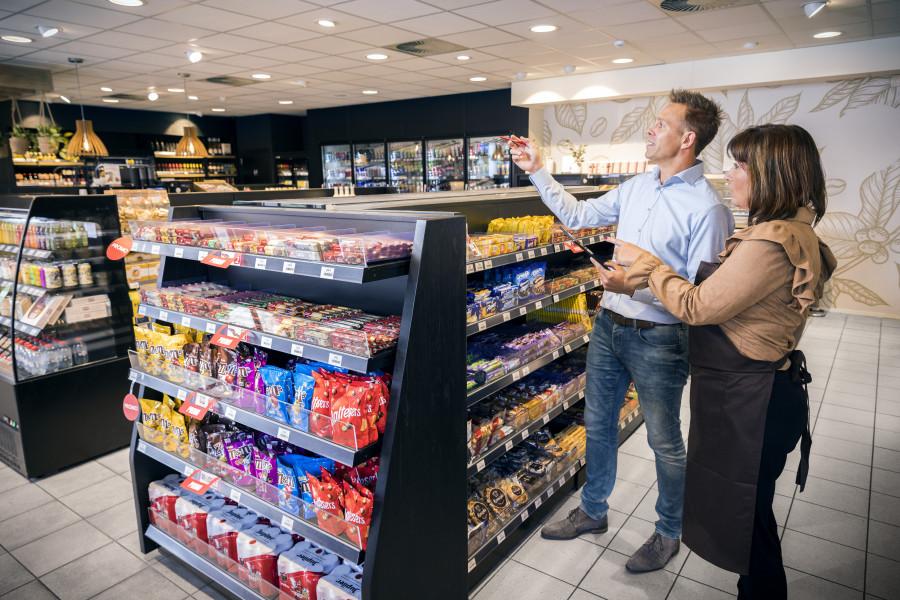
What Retail Buyers Notice Before Approving Shelf Space Today
Getting shelf space is not simply about having a great product. Retail buyers see countless products competing for limited space, and their decisions often happen faster than brands realize. Before they approve a product for the shelf, they are already evaluating its packaging, display potential, pricing, differentiation, shopper appeal, and overall retail readiness.
A product may look impressive in a presentation, but buyers are thinking beyond the pitch: Will it sell? Will shoppers notice it? Will it fit the store? Will it justify the space it takes?
That is why understanding what retail buyers notice first can give brands a major advantage. From visual presentation to practical shelf performance, the smallest details can influence whether a product earns valuable retail space—or gets passed over.
First Impressions Can Win Shelf
Strong Visuals Create Immediate Buyer Confidence

Before a retail buyer digs into sales forecasts or product specifications, they’re likely to form an opinion based on what’s right in front of them.
That doesn't mean a beautiful package automatically wins approval. Far from it. But strong visuals can make a buyer stop, look closer, and become curious enough to learn more.
Think about walking through a crowded retail aisle. Hundreds of products are competing for attention. Some blend into the background, while others practically shout, “Look at me.” The latter usually have something going for them: clear branding, recognizable color cues, strong hierarchy, or packaging that instantly communicates what the product is.
Retail buyers understand this dynamic. They’re not just looking at whether the package is attractive. They’re asking whether the product can attract shoppers without needing a sales representative standing beside it.
That first impression matters.
A product that looks polished, intentional, and ready for retail gives buyers an immediate sense of confidence. On the other hand, packaging that feels unfinished or confusing can raise doubts before the conversation has even started.
Packaging Signals Product Market Potential
Packaging Communicates Quality And Market Readiness
Packaging is often the first physical representation of a brand that a buyer sees. In a matter of seconds, it can communicate quality, positioning, audience, price point, and purpose.
That's a lot of work for one package.
A buyer may look at the front of a product and immediately wonder: Does this look premium? Does it feel appropriate for this retailer? Is the benefit obvious? Can a shopper understand the product without reading the entire package?
If the answer is yes, you've cleared an important hurdle.
Packaging also tells a subtle story about how seriously a company understands the market. Poor typography, overcrowded messaging, weak photography, or inconsistent branding can make a product appear less established. Meanwhile, thoughtful packaging can suggest that the brand understands both its customer and its retail environment.
Of course, packaging isn't just about aesthetics. Practical considerations matter, too.
Can the package sit securely on a shelf? Is the product easy to stock? Does the size make sense for the category? Is the information easy to read from several feet away?
Those details may seem small, but when multiplied across hundreds or thousands of units, they become meaningful.
Displays Must Prove Retail Value
Displays Demonstrate Practical Retail Value
A display can look fantastic in a concept presentation and still fail to impress a retail buyer.
Why? Because buyers aren't purchasing artwork. They're evaluating a retail solution.
A strong display should demonstrate how it can help the product sell while making life easier for the retailer. It should show that the brand has thought about where the product belongs, how shoppers will encounter it, and how the display will work within an actual store environment.
A good retail display answers practical questions before the buyer even has to ask them.
Will it fit the available footprint?
Can employees assemble it quickly?
Will products remain visible after shoppers interact with it?
Can it withstand everyday store traffic?
Does it create a clear shopping experience?
These questions can make or break an otherwise impressive concept.
The best displays strike a balance between creativity and practicality. They attract attention without becoming a headache for store staff.
That's the sweet spot.
Buyers Notice Clarity Before Creativity
Clear Messaging Helps Buyers Understand Quickly
Creative ideas are great. Confusing ideas aren't.
Retail buyers don't have unlimited time to decode a product concept. If they need several minutes to figure out what the product does, who it's for, or why shoppers should care, you're already fighting an uphill battle.
Clear messaging helps remove that friction.
A strong product presentation should quickly communicate three basic things:
What is the product?
Who is it for?
Why should shoppers choose it?
Once those questions are answered, creativity can take center stage.
This is where many brands get things backward. They focus heavily on clever taglines, elaborate graphics, and flashy concepts while forgetting to explain the basic value proposition.
Don't make the buyer work for the information.
Simple doesn't mean boring. In fact, simplicity often makes a product more powerful because the important message doesn't get buried underneath everything else.
Shelf Space Requires Stronger Justification
Shelf Space Requires Proven Sales Potential
Shelf space is valuable real estate.
Every inch has an opportunity cost. If a retailer gives your product space, something else may have to move, shrink, or disappear altogether. That's why buyers need a convincing reason to believe your product deserves that space.
A compelling pitch should connect the product to commercial potential.
That might include previous sales results, category growth, customer demand, repeat purchases, successful regional launches, or strong promotional performance. The exact evidence will vary, but the principle remains the same: buyers want confidence that the product can earn its place.
And here's the kicker—enthusiasm alone isn't evidence.
Saying, “Customers love this product,” sounds positive, but showing actual customer feedback, sales results, repeat purchase data, or test-market performance is much stronger.
Retail buyers are looking for signs that your product isn't merely interesting. They want to know whether shoppers are likely to buy it.
Product Placement Must Support Shopper Behavior
Where a product sits can be just as important as how it looks.
A brilliant product placed in the wrong location can disappear into the retail environment. Meanwhile, a strategically positioned product can benefit from traffic, visibility, category associations, and shopper habits.
That's why product placement needs to be considered early.
Ask yourself: Where will shoppers naturally encounter this product? What products will sit next to it? Is it an impulse purchase or something customers actively seek? Does it belong at eye level, on an end cap, within a category section, or somewhere else entirely?
Retail buyers think about these questions because they understand shopper behavior.
Your product needs to make sense within that behavior.
A good presentation doesn't simply say, “Here's our product.” It shows how the product can live within the store.
That's a much stronger argument.
Buyers Look For Strong Differentiation
Buyers Look For Strong Differentiation

Retail shelves are crowded, and “good quality” isn't always enough to stand out.
Buyers need to understand what makes your product meaningfully different from the alternatives already available. That difference could come from the product itself, packaging, ingredients, functionality, price positioning, brand story, convenience, or the shopping experience.
But there's a catch.
Differentiation should be easy to understand.
If your unique selling point takes a paragraph to explain, it probably needs another look.
A buyer should be able to identify your product's key difference without having to connect a dozen dots. That distinction can then become part of the packaging, display, merchandising strategy, and sales presentation.
In other words, differentiation shouldn't live in the pitch deck alone. It should show up everywhere.
Creative Concepts Need Commercial Purpose
Creative Concepts Need Commercial Purpose
Creativity can open the door, but commercial thinking gets you through it.
Retail buyers aren't necessarily looking for the most elaborate display or the wildest packaging concept. They're looking for something that works.
A creative concept becomes much more persuasive when it has a clear business purpose.
For example, a display might use an unusual shape to create visibility. That's interesting. But if the shape also increases product capacity, improves shopper access, and creates a natural stopping point in the aisle, now the creativity has a commercial purpose.
That's what buyers want to see.
Every design choice should ideally answer a question: What does this help accomplish?
If a graphic improves navigation, great.
If a display makes the product easier to shop, even better.
If a packaging element communicates a key benefit from several feet away, you've got something useful.
Creative doesn't have to mean complicated. Sometimes the smartest retail ideas are surprisingly simple.
Retail Readiness Influences Buyer Decisions
Retail Readiness Reduces Approval Concerns
A buyer isn't only deciding whether they like your product. They're also thinking about what happens after approval.
That's where retail readiness comes into play.
A product that is already prepared for real-world retail conditions is easier to approve than one that still has major unanswered questions.
Retail readiness can include:
Finalized packaging
Reliable production capacity
Appropriate case-pack configurations
Clear product dimensions
Barcode and labeling requirements
Shipping information
Display specifications
Merchandising guidelines
Inventory availability
Promotional support
When these details are organized, buyers can move forward with fewer concerns.
When they're missing, hesitation creeps in.
And hesitation is dangerous when you're competing against dozens of other brands.
The more uncertainty you remove, the easier you make the buyer's job.
Operational Details Influence Final Decisions
Operational Details Influence Final Decisions
Here's something brands sometimes overlook: retail buyers have to think operationally.
A product might look fantastic, but if it's difficult to ship, store, stock, replenish, or merchandise, the excitement can fade quickly.
Retail is a complex machine. Products need to move through distribution centers, arrive at stores, get placed on shelves, and remain available for shoppers.
That means operational details matter.
Buyers may consider product dimensions, shipping efficiency, packaging durability, case quantities, replenishment needs, display assembly, and storage requirements.
It isn't glamorous, but it matters.
In fact, getting these details right can give a brand a competitive edge. While another supplier is still figuring out packaging dimensions or display logistics, a retail-ready brand can make the buyer's decision much easier.
Sometimes, boring details win big opportunities.
Consistent Branding Builds Buyer Trust
Consistent Branding Builds Buyer Trust
Consistency might not create an immediate “wow” moment, but it creates something arguably more valuable: trust.
When your packaging, displays, sales materials, website, product photography, and brand messaging all feel connected, buyers see a company that knows what it's doing.
Inconsistent branding can have the opposite effect.
Imagine seeing premium packaging in one presentation, outdated graphics in another, and completely different messaging on the product website. It creates uncertainty.
A consistent brand feels more established.
It tells the buyer that the company understands its positioning and is capable of presenting itself professionally across multiple retail touchpoints.
Trust isn't built through one flashy presentation. It's built through dozens of small signals that all point in the same direction.
Strategic Presentation Strengthens Shelf Space Approval
Strategic Presentation Strengthens Shelf Space Approval

When brands present a product to retail buyers, the presentation should tell a commercial story.
Don't simply walk through features.
Show the opportunity.
Start with the shopper problem or market need. Explain how the product solves it. Demonstrate why shoppers will notice it. Show how the packaging communicates the value. Explain where it belongs in the store. Then connect those elements to sales potential.
A strong presentation might include:
Product positioning – What makes the product relevant?
Target shopper – Who is most likely to buy it?
Competitive difference – Why this product instead of another?
Packaging strategy – How does it communicate value?
Display concept – How will it attract attention?
Placement strategy – Where should shoppers encounter it?
Sales evidence – What proves the concept can work?
Operational readiness – Can the retailer execute it easily?
This approach gives the buyer a complete picture.
Instead of asking them to imagine how everything might work, you're showing them a realistic path from approval to purchase.
What Retail Buyers Notice Before They Approve Shelf Space
The answer isn't just one thing.
They notice everything that helps them determine whether your product can succeed in their environment.
They notice the packaging before they read your sales deck. They notice whether the display makes sense. They notice whether your messaging is clear. They notice whether the product looks different from its competitors.
More importantly, they notice whether you've thought like a retailer.
That's the real difference.
A brand that only thinks about its product says, “Look how great this is.”
A brand that thinks like a retailer says, “Here's why this deserves space, here's how shoppers will find it, and here's how we'll help it sell.”
That second conversation is much harder to ignore.
How Brands Can Prepare Before Meeting Retail Buyers
Before your next buyer presentation, take a step back and look at your product from the retailer's perspective.
Ask yourself:
Does the packaging stand out immediately?
Can someone understand the product in seconds?
Is the primary benefit obvious?
Does the product look appropriate for the retailer?
What makes it different from competing products?
Can you demonstrate actual sales potential?
Does your display have a clear purpose?
Is the proposed placement logical?
Are your operational details ready?
Can the retailer easily understand what happens after approval?
If any answer is unclear, you've found an opportunity to strengthen your pitch.
It doesn't mean the product is bad. It simply means the buyer may not have enough evidence yet.
And that's fixable.
Conclusion

Getting shelf space isn't about shouting the loudest. It's about giving retail buyers enough confidence to say yes.
First impressions matter because buyers need a reason to pay attention. Packaging matters because it communicates quality and market readiness. Displays matter because they need to deliver more than visual appeal. Clear messaging matters because nobody wants to solve a puzzle before understanding a product.
Most of all, retail buyers want to see commercial potential backed by thoughtful execution.
The brands that stand out aren't necessarily the ones with the biggest budgets or the flashiest concepts. They're the ones that understand the entire retail journey—from the buyer's first glance to the shopper's final purchase.
So, before asking for that valuable shelf space, take another look at what you're presenting.
Would a buyer see a promising product—or a promising retail opportunity?
That distinction could make all the difference.
Frequently Asked Questions
1. What do retail buyers look at first?
Retail buyers often notice visual presentation first, including packaging, branding, product clarity, and overall shelf appeal. These elements help determine whether the product deserves closer consideration.
2. Why is packaging important to retail buyers?
Packaging communicates product quality, positioning, target audience, and key benefits. It also provides practical information about how easily a product can be stocked, displayed, and shopped.
3. Do retail buyers care about product displays?
Yes. Buyers often evaluate whether a display can attract shoppers while remaining practical for store employees. A good display should support visibility, accessibility, merchandising, and sales.
4. How can a brand prove its product deserves shelf space?
Brands can use sales data, customer feedback, test-market results, category insights, repeat purchase information, and other evidence that demonstrates demand and commercial potential.
5. What makes a product stand out to retail buyers?
Strong differentiation, clear messaging, compelling packaging, shopper relevance, and evidence of sales potential can help a product stand out from competing products.
6. Why does retail readiness matter?
Retail readiness reduces uncertainty. When packaging, logistics, product specifications, inventory, displays, and merchandising requirements are already organized, buyers have fewer concerns to resolve before approval.
7. Should brands prioritize creativity or practicality?
Both matter, but creativity should support a commercial purpose. The strongest retail concepts combine visual impact with practical merchandising, shopper engagement, and operational efficiency.
8. How can brands improve their chances of getting shelf space?
Brands should approach the buyer from a retailer's perspective. Show how the product will attract shoppers, fit the store environment, differentiate itself, generate sales, and remain easy to manage operationally.