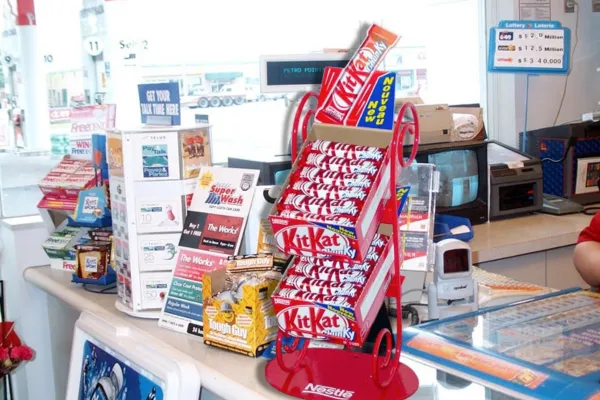
Why Great Products Still Get Ignored on Retail Shelves
Imagine spending months developing the perfect product. You invest in premium ingredients, attractive packaging, and careful branding. The product finally reaches retail shelves, only to sit there while competing products continue to sell.
The problem often isn't the product itself. It's visibility.
In a busy retail environment, shoppers make buying decisions within seconds. If your product fails to grab attention, it may never get the chance to prove its quality. Even exceptional products can be overlooked when they blend into the shelf.
In this article, we'll explore why great products get ignored, how shoppers actually make purchasing decisions, and how strategic retail displays can help your products stand out and drive more sales.
Great Products, Empty Retail Carts
A surprising number of businesses assume that creating a better product automatically leads to better sales. It sounds logical. Build something customers genuinely want, place it on a store shelf, and watch it fly off.
Unfortunately, retail doesn't work that way.
Walk into any grocery store, pharmacy, electronics retailer, or home improvement store. Thousands of products compete for attention at exactly the same time. Every shelf is crowded with brands making similar promises. Some products deserve more attention than they receive, while others continue selling simply because shoppers notice them first.
This is why quality alone doesn't sell.
Customers rarely compare every product available. Most make decisions quickly based on what catches their attention. If your product isn't noticed during those few seconds, it effectively doesn't exist.
Even companies with outstanding products often experience:
Slow retail sales
Poor shelf performance
Low product awareness
Weak customer engagement
Missed impulse purchases
Great products need visibility before they ever get the chance to prove their value.
Why Great Products Still Get Ignored on Retail Shelves
The answer isn't always pricing.
It isn't always marketing.
And surprisingly, it isn't always the packaging either.
The biggest challenge is simple: shoppers don't see your product.
Retail stores are intentionally designed to maximize product density. Every shelf contains dozens, sometimes hundreds, of competing items. The human brain simply cannot process every option available.
Instead, shoppers filter information automatically.
They notice products that are:
Easier to spot
Different from surrounding products
Positioned where the eye naturally travels
Supported by eye-catching displays
Associated with promotions or featured locations
Everything else fades into the background.
This explains why shoppers walk right past products that might actually be better than the ones they purchase.
It's not rejection.
It's invisibility.
Why Shoppers Walk Right Past
Understanding shopper psychology changes everything.
Most buying decisions happen much faster than people realize.
Consumers often enter stores with a rough shopping list, but many purchases happen almost automatically. Rather than carefully evaluating every product, shoppers rely on shortcuts to make decisions efficiently.
These mental shortcuts include:
Familiar brands
Products at eye level
Bright visual displays
Promotional signage
Easy-to-find products
Split-second decisions drive purchases.
If your product isn't immediately visible or memorable, shoppers simply move on.
Think about your own shopping habits.
How often do you stop and inspect every single product on a shelf?
Probably never.
Instead, your attention naturally moves toward products that stand out first.
That's exactly how your customers behave as well.
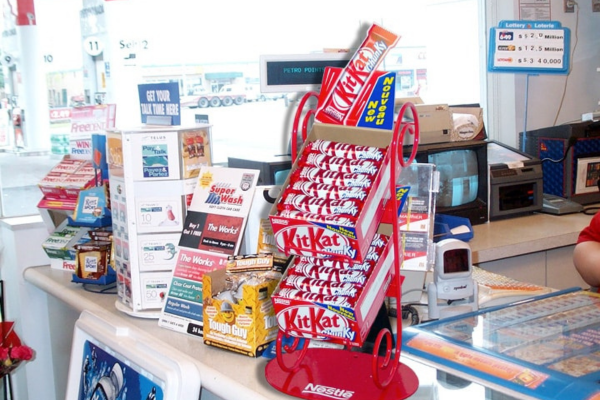
Shelf Visibility Drives Buying Decisions
Visibility is one of the most valuable forms of marketing inside a retail store.
Outside advertising gets customers through the door.
Shelf visibility influences what ends up inside their shopping cart.
Retail experts have known this for years.
Brands invest heavily in:
End-cap displays
Floor displays
Counter displays
Sidekick displays
Promotional islands
Temporary retail fixtures
Why?
Because visibility creates more buying opportunities.
When products become easier to notice, they become easier to purchase.
Better placement increases product discovery, particularly for new products that haven't yet built strong brand recognition.
For smaller brands, visibility often matters even more than advertising because every additional shopper who notices the product represents a potential first-time customer.
Packaging Alone Doesn't Win Sales
Many businesses spend months perfecting packaging.
They hire designers.
Test colors.
Refine logos.
Experiment with typography.
All of those decisions matter.
But packaging can't do everything alone.
Packaging only begins working after someone notices the product.
If shoppers never see it, even award-winning packaging has no opportunity to influence buying decisions.
Imagine hiding a beautifully wrapped gift inside a closed cabinet.
No matter how attractive the wrapping is, nobody can appreciate it until they discover it.
Retail shelves operate the same way.
Displays reinforce product value instantly by making the product impossible to overlook in the first place.
Packaging attracts.
Displays invite.
Together they create a much stronger retail presence than either could accomplish alone.
Standing Out Beats Blending In
Retail is visual competition.
Products aren't competing only against direct competitors.
They're competing against every colorful label, promotional sign, seasonal display, and price tag surrounding them.
When everything looks similar, nothing captures attention.
Contrast captures shopper attention faster.
This doesn't necessarily mean louder colors or bigger graphics.
Contrast can come from:
Unique display shapes
Elevated product positioning
Creative structural designs
Interactive merchandising
Distinctive display materials
Strategic lighting
Effective product grouping
Displays help brands stand apart by creating separation from surrounding products.
Instead of becoming another box on the shelf, your product becomes a destination.
That small difference often translates into measurable increases in shopper engagement.
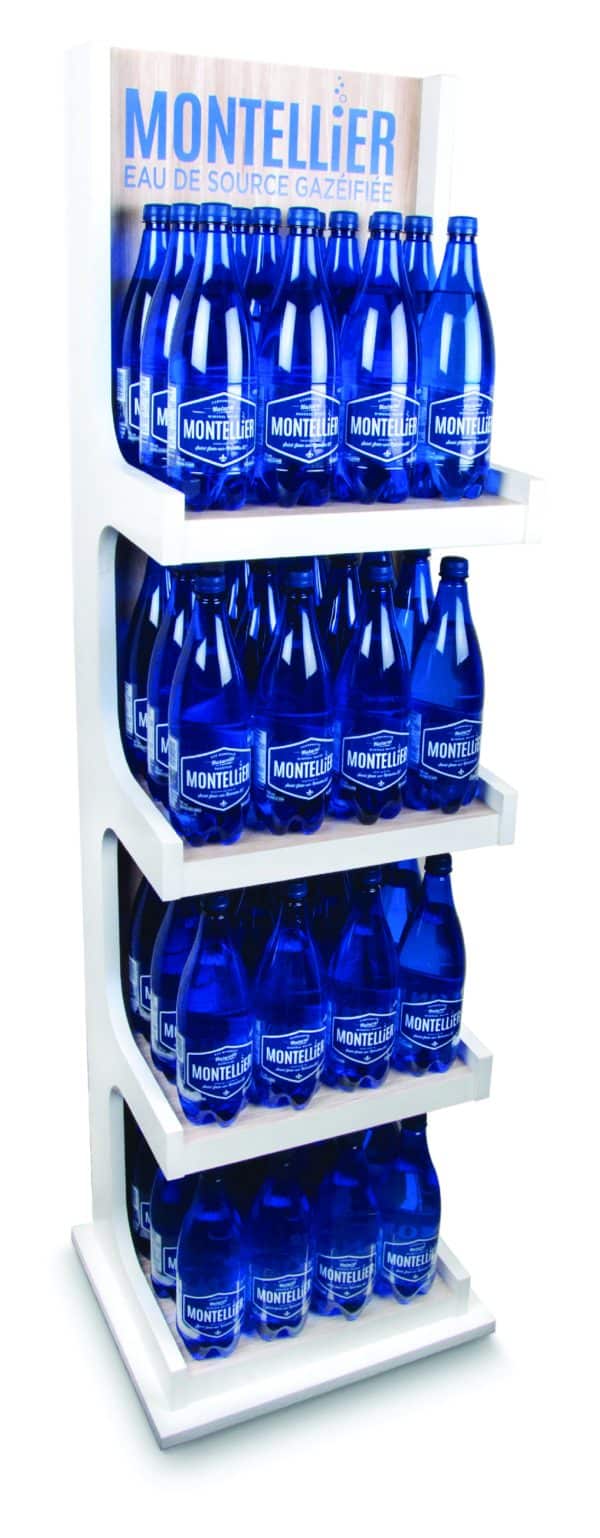
Why Great Products Still Get Ignored on Retail Shelves: Visibility Is the Missing Link
Many businesses spend thousands of dollars improving product quality while investing very little in how the product is actually presented inside retail stores.
That's a costly imbalance.
A premium product deserves premium visibility.
The reality is that shoppers cannot buy what they never notice. Brands often assume low sales reflect weak demand, when the real issue is simply that their products fail to stand out in a crowded retail environment.
Improving visibility doesn't require changing your formula, redesigning your logo, or lowering your prices. Sometimes, it simply means making sure your product earns the attention it deserves.
More often than not, visibility is the missing link between a great product and strong retail performance.